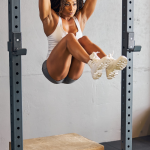


Humans are often referred to as movers because they are either pulling something or pushing something. Pulling is, therefore one of the major movements in a human being. This is where the vertical pull exercises come in. They help improve this important aspect of our lives, by hitting the concerned muscles, thus making the movement simpler.
Vertical pull exercises are any exercises that will see you pulling through a vertical plane. Some of the common ones include pull-ups and chin-ups.
However, there exists more vertical pull exercises, which can be used to target different upper body muscles.
Mostly, vertical pull exercises are considered advanced-level exercises because they require the use of one’s body as the main resistance.
This means you are required to lift the whole of your body up using only your arms and shoulder muscles. It will be a bit of work if you don’t already possess significant strength here.
In this article, you will get to learn everything you need to know about this category of strength training exercises including how to perform them with the correct form for maximum benefits, common errors to avoid, and alternatives to try out.
HOW TO DO VERTICAL PULL EXERCISES PROPERLY
Whether you are a beginner or advanced-level trainer, use this step-by-step guide to build your upper back and shoulder strength.
As mentioned before, to complete a full vertical pull exercise, you will need to pull up your body from a dead hang position, using a grip that is facing away from your body- an overhand grip.
Ready to try the vertical pull exercises? Here is how to:
Start by standing on either a block or bench just below the bar.
With your hands positioned at about shoulder-width apart, grab the bar with an overhand grip, with your wrists pronated and your palms facing away from your body.
Gently allow your body to hang by allowing your feet to come off the block or bench supporting them. Ensure that your hands remain fully extended while in this dead hang position.
Proceed to engage your core and find full body tension. You can achieve this by squeezing your glutes and flexing your quads.
To start the pull, depress your lats and begin pulling upwards to bring your chin over the bar.
Complete the pull by completely squeezing your lats together.
For the downward movement, extend your arms slowly to return to a full hang position while maintaining full body tension.
VERTICAL PULL EXERCISES COMMON MISTAKES TO AVOID
Using the proper vertical pull exercise form will help prevent injuries and encourage muscle recruitment. While this sounds easy enough, there are quite several common mistakes trainers make while performing these movements.
However, this is not to discourage you. The good news is that these mistakes can immediately be corrected. Actively working to avoid them will increase in these exercises’ effectiveness.
POSITION OF YOUR EYE
Avoid looking at the bar directly because this will see you moving your body further away, making the movement extremely difficult.
To correct this, always endeavor to maintain a neutral neck position throughout the exercise by keeping your gaze directly in front of you and not the bar.
Assume you are holding an orange between your collarbone and chin.
NOT ENGAGING YOUR LATS
When it comes to initiating the pull in vertical pull exercises, lack of Lat engagement is often a common issue that can affect your form and, eventually, your ability to complete the pull-up motion.
To ensure you avoid this mistake, before starting the pull, set your lats down and back as this will allow for better lat engagement and less biceps recruitment.
LACK OF TENSION IN THE WHOLE BODY
Once you start the pull, you can easily be tempted to focus purely on the pull and forget about full body tension which will leave you unable to complete the full movement.
To avoid this, pay attention to generating and maintaining full body tension during the pulls. Aim to keep your core engaged and imaging, distributing tension from your glutes to your toes.
This will come in handy in completing the pulls and get you generally stronger.
LACK OF ENOUGH STRENGTH AND ELBOW DRIVE
At the top of the pulls in these exercises, the lack of strength and elbow drive can lead to shoulder shrugging to get your chin all the way up over the bar.
You will divert the focus of these exercises from your lats to your traps when you shrug your shoulders.
To avoid this, squeeze your elbows together and maintain a long neck position.
VERTICAL PULL EXERCISES MUSCLES WORKED
As mentioned before, there are a few muscles involved in these exercises. However, the primary mover in most of them is the Latissimus Dorsi.

Commonly known as the lats, these are the wing-like muscles that originate from your armpits and spread to your mid and lower back.
Additionally, your rhomboids, biceps, and trap also help in pulling.


VERTICAL PULL EXERCISES BENEFITS
Below are some of the benefits you will reap from these exercises.
BUILDS UPPER BODY STRENGTH
Since this exercise recruits more than one muscle simultaneously, they are considered as compound exercises. Constant engagement of these upper body muscles will increase their strength.
LOW IMPACT EXERCISES
If you have problems with high-impact exercises due to injury and sores, the vertical pull exercises are low-impact exercises for building strength.
VERTICAL PULL EXERCISES ALTERNATIVES
BODYWEIGHT ROWS
The bodyweight rows exercise is commonly combined with scapular stabilization exercises by trainers aiming to increase their pull-up count.
KNEELING LAT PULLDOWNS
This alternative is suitable for those who can’t access a lat pulldown machine at the gym since it can be simplified by using a resistance cable.
TAKE AWAY
If you are a beginner, vertical pull exercises may be a little tough at first, but eventually, as you progress, you will find it easy.