


This article provides general fitness information for educational purposes. Exercise may support strength and overall health, but results vary. Consult a qualified health professional before starting any new fitness program, especially if you have injuries or medical concerns.
Introduction
Many people start exercising at home but feel confused about which exercises actually work.
Some workouts require equipment. Others look complicated.
That is why regular push ups remain one of the most reliable exercises for building upper body strength.
You do not need a gym, machines, or expensive equipment. A small space on the floor is enough to begin a bodyweight chest exercise that has been used for decades.
What Are Regular Push Ups
Regular push ups are a classic bodyweight strength training exercise that targets the upper body.
The movement involves lowering your chest toward the floor and pushing your body back up using your arms and chest muscles.
Because the exercise uses your own body weight, it fits perfectly into a home workout push ups routine.
Many trainers consider push ups one of the best foundational exercises for beginners.
Muscles Worked During Push Ups
One reason push ups are so effective is that they activate several muscle groups at the same time.
The main push up muscles worked include:
-
Chest muscles (pectorals)
-
Triceps
-
Shoulders (deltoids)
-
Core muscles
-
Upper back stabilizers
This makes push ups a powerful upper body bodyweight workout that improves both strength and stability.
Step by Step: How to Do Regular Push Ups Correctly
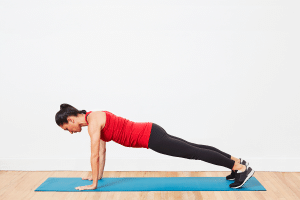
Learning proper push up form is important to avoid injuries and maximize results.
Step 1: Start in a plank position
Place your hands slightly wider than shoulder width.
Your body should form a straight line from head to heels.
Step 2: Engage your core
Tighten your stomach muscles and keep your hips level.
This helps maintain correct posture during the exercise.
Step 3: Lower your body
Slowly bend your elbows and lower your chest toward the floor.
Keep your elbows at about a 45-degree angle from your body.
Step 4: Push upward
Press through your palms and return to the starting position.
Your arms should extend fully at the top.
Repeat for several repetitions.
Benefits of Regular Push Ups
Push ups are popular because they offer several fitness benefits.
Upper body strength
Push ups strengthen the chest, shoulders, and triceps using bodyweight resistance.
Core stability
Your core muscles remain active throughout the exercise, helping improve balance and posture.
No equipment needed
Push ups are ideal for people who prefer chest workouts at home.
Functional strength
The movement mimics everyday pushing actions, which can support overall physical performance.
Research suggests that bodyweight exercises may help improve muscular endurance and stability.
[Source: PubMed]
Push Ups for Beginners
If you are new to fitness, start slowly.
Begin with a simple push up routine.
Example beginner routine:
-
3 sets of 8 push ups
-
Rest 60 seconds between sets
-
Perform the routine 3 times per week
Over time, your strength will improve.
You can then increase repetitions or explore other push up variations.
Common Push Up Mistakes
Many beginners make small mistakes that reduce the effectiveness of the exercise.
Dropping the hips
This can place stress on the lower back.
Partial repetitions
Lowering only halfway limits muscle activation.
Incorrect hand position
Hands placed too wide or too narrow may strain the shoulders.
Learning how to do push ups correctly improves both safety and results.
Push Up Variations
Once you feel comfortable with regular push ups, you can try different variations.
Examples include:
-
Incline push ups
-
Decline push ups
-
Explosive push ups
Each variation targets the muscles slightly differently and can help keep workouts interesting. Learn more Plyometric Push Ups vs Regular Push Ups
Why This Exercise Works
Push ups use compound movement, meaning multiple joints and muscles work together.
This type of training improves coordination and muscle efficiency.
Bodyweight resistance also helps develop muscular endurance.
Research in strength training suggests compound exercises may support muscle activation and functional strength.
[Source: NIH]
Safety Tips
To reduce injury risk during push ups:
-
Warm up your shoulders and wrists
-
Maintain proper push up form
-
Start with fewer repetitions if you are a beginner
-
Stop immediately if you feel pain
Listening to your body is an important part of safe training.
Frequently Asked Questions
Are regular push ups good for beginners
Yes. Regular push ups are one of the most beginner friendly bodyweight exercises. They help build upper body strength and core stability without requiring gym equipment.
How many push ups should beginners do
Beginners can start with 3 sets of 5 to 10 repetitions. As strength improves, the number of repetitions can gradually increase.
Do push ups build chest muscles
Yes. Push ups activate the chest muscles along with the shoulders and triceps, making them an effective bodyweight chest workout.
Can push ups replace gym workouts
Push ups can build strength and endurance, but many people combine them with other exercises for balanced training.
Is it okay to do push ups every day
Daily push ups may improve endurance, but muscles also need recovery time. Many trainers suggest performing push ups three to four times per week.
Why are push ups difficult for beginners
Push ups require coordination and strength in multiple muscles. Beginners often need time to develop the necessary strength.
What is the correct push up form
Correct push up form includes a straight body line, controlled movement, and elbows positioned at about 45 degrees from the torso.
Do push ups help with weight loss
Push ups burn calories and build muscle. When combined with healthy eating and regular activity, they may support weight management.
Can push ups improve posture
Yes. Because push ups strengthen the chest, shoulders, and core, they can help support better posture.
What are the best push up variations
Common push up variations include incline push ups, decline push ups, and explosive push ups. Each version challenges the muscles differently.
Final Thoughts
Sometimes the simplest exercises are the most effective.
Regular push ups remain one of the best ways to build upper body strength using only your body weight.
They require no equipment, very little space, and can fit easily into any home workout routine.
With consistent practice and proper form, push ups can support strength, endurance, and overall fitness.