
As a fitness fan, have you been looking for a compound total body exercise that builds your posterior chain strength, muscle mass and fitness? Look no further. Today’s feature will equip you with the relevant skills through sumo deadlift high pull movements.
THE MUSCLES WORKED IN SUMO DEADLIFT HIGH PULL
The sumo deadlift high pull is an often overlooked movement that is very handy in Crossfit programming. The sumo deadlift is an exercise that stresses a wide range of muscle groups that function across numerous joints in the body. This exercise works on the following muscles:
SPINAL ERECTORS MUSCLES

The spinal erectors comprise a group of muscles that originate near the scrum and extend vertically up the length of the back.
They lie on each side of the vertebral column.
TRAPEZIUS MUSCLES

The trapezius comprises a pair of triangular muscles extending over the back of the neck and shoulders and moving the head and shoulder blade. It is the large and easily recognized superficial muscle of the upper back.
POSTERIOR SHOULDER MUSCLES

The posterior shoulder muscles are found on the shoulder and are divided into two strata. That is, the palpable superficial muscles and non-palpable deep muscles. The posterior muscles are trapezius and underlying levator scapular.
QUADRICEPS MUSCLES (VASTUS MEDIALIS)

These are the large muscles at the front of the thigh, which is divided into four distinct portions and are responsible for extending the legs.
HAMSTRING MUSCLES

The hamstrings are a group of four muscles: the long head of the biceps femoris, the short head of the biceps femoris, the semitendinosus and the semimembranosus.
Each hamstring crosses two joints -the hip and the knee. The hamstring muscles are responsible for your hip and knee movements in walking, squatting, bending your knees and tilting your pelvis.
GLUTES MUSCLES

Glutes are large fleshy buttocks muscles stretching from the back portion of the pelvic girdle (hip bone) down to the greater trochanter, the bony protuberance at the top of the femur (thigh bone). These are the muscles that define the shape of the buttocks, that is the gluteus maximus, gluteus mediums, and gluteus minimums
BICEPS AND FOREARM MUSCLES


The biceps are muscles attached to the arm bones by tough connective tissues called tendons.
The tendons that connect bicep muscles to the shoulder joint in two places are called the proximal biceps tendons.
These are muscles that move the forearm and are located along the humerus, including the triceps brachial,biceps brachial and brachioradialis.
There are twenty and above muscles that cause movement in the wrist, hand and fingers. These muscles are located along the forearm.
BENEFITS OF SUMO DEADLIFT HIGH PULL
There are four main benefits of performing the sumo deadlift high pull. They include;
POSTERIOR CHAIN DEVELOPMENT
Posterior chain development is a term used to describe the muscle groups of the back of the body responsible for hip extension and most human locomotive and powerful movements.
These movements target the hamstrings, gluteals, and back. All of these increase muscle hypertrophy and strength used during explosive and strength-based movements in sports, training and day-to-day life.
POWER OUTPUT
Power output is an option that helps develop power output capacities in beginner athletes or those unable to perform more complicated posterior chain power movements.
COMPOUND TOTAL BODY MOVEMENT
The sumo deadlift high pull revolves around compound total body exercises. Those looking to improve their athleticism, functional strength and caloric expenditure may find this movement very useful as it emphasizes muscle mass per repetition.
METABOLIC CONDITIONING
Metabolic fitness is necessary in sports that require cardiovascular fitness, anaerobic abilities and muscle endurance.
The sumo deadlift high pull can be incorporated into workouts and training cycles to stress large amounts of muscle tissue.
This movement also helps drive the heart rate up and instills systemic fatigue. In so doing, this makes an athlete get used to more rigorous training to mentally and physically become more adept at dealing with such stresses.
HOW TO DO SUMO DEADLIFT HIGH PULL
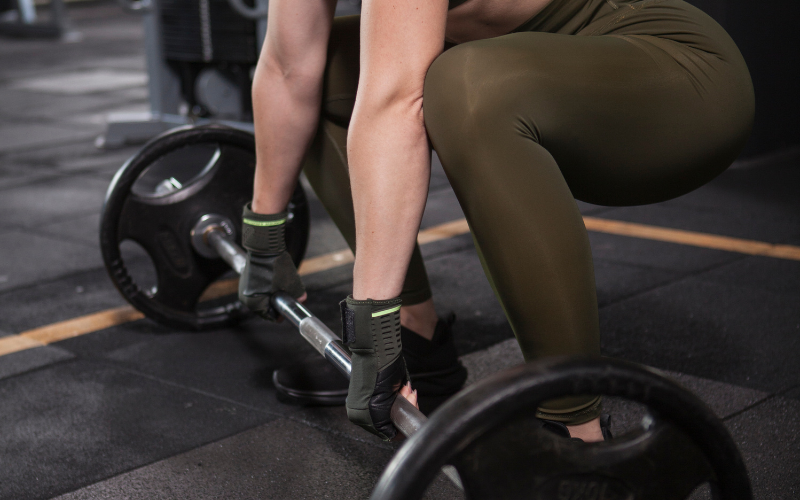
- Position your feet outside your shoulder width, toes pointed out. Grab the bar with a narrow grip, inside your shins.
- Keep your butt low, your back flat, and your knees pointed outward, coming out of the hole. Engage your core. Pull the bar explosively straight up to your body.
- Reach full hip and knee extension, then execute the high pull until the bar is just below your chin.
- Let the bar fall back to the floor, keeping your core tight throughout to protect the lower back.
ALTERNATIVES TO SUMO DEADLIFT HIGH PULL
The sumo deadlift high pull has several variations that can help stress many body muscles, especially the hips, legs, back and shoulders. These variations will also help diversify your fitness and training. Some of these alternatives are also used by coaches and athletes to target similar muscle groups.
CLEAN SNATCH HIGH PULL
Try this if you want to build serious strength and power specific to sports performance and Olympic weight lifting.
The only difference between sumo deadlift high pull and clean/ snatch high pull is the foot and hand placement.
This variation minimizes any unwanted strain and str6on the shoulder joints, usually seen as an exercise contraction on the sumo deadlift high pull.
Additionally, the clean/ snatch high pull is an efficient and safe training option for most individuals.
POWER CLEAN/ SNATCH
The power clean /snatch exercise can help an individual create far much more power outputs than a standard sumo deadlift high pull.
If you want to run faster, jump higher or be more explosive, then the power clean/snatch is the way to go.
AMERICAN SWING
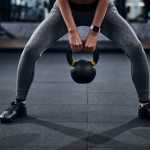
The American/ overhead kettlebell/ dumbbell swing is a total body exercise that can easily replace the sumo deadlift high pull. It is a quick and easy option to the comparatively more cumbersome barbell sumo high pull.
COMMON MISTAKES TO AVOID IN SUMO DEADLIFT HIGH PULL
To err is said to be human. However, the common mistakes cited below will go a long way to help you steer off such errors.
WEARING THE WRONG SHOES
In sports, it is believed that a good lift begins at the feet, and this is also true with the deadlift. For successful deadlifts, choosing shoes that provide a hard, flat sole, as close to barefoot as possible, is important. Because it will provide the correct support, improve your posture and protect you from any injury.
FAILING TO WARM UP
You must do it with a deadlift in mind as you warm up.
Whereas your body should be warm in terms of temperature, the specific muscles and joints used in the deadlift must also be prepared before attempting your programmed sets.
Therefore spending extra 10 to 15 minutes in the relevant warm-ups will help you perform at your best and minimize injury risk since all your joints will be ready to act.
The planned warm-ups should factor in (a)general warm-ups, (b)mobility exercises, (c)dynamic stretches, and (d)activation exercises.
Finally, if you had a formed opinion making you overlook the sumo deadlift high pull, it’s high time you changed your mindset and reaps the best out of these exercises. Best of luck